
Denton County · Raised floors and crawl spaces
Pier and Beam Foundation Repair in Denton, TX
A raised floor over a crawl space moves in its own ways. Here's what to check, and what the fix usually involves.
A floor that dips toward one wall, or a door that starts to drag, is unsettling, especially in an older house. If your home stands on piers with a crawl space underneath, that's a pier and beam foundation. Pier and beam foundation repair in Denton, TX starts by going under the floor to see which part has moved.
- Free inspection
- No obligation
- Town-by-town soil data
- Referral service, disclosed
- Call (940) 535-7201
A free inspection is the easiest way to find out. A foundation repair company that works around Denton will look underneath and measure the floors.
What have you seen?
When You Need Pier and Beam Foundation Repair
In a pier and beam house, the floor doesn't touch the ground. Piers stand on the soil, wood beams rest on the piers, and floor joists rest on the beams. When one pier sinks or rises, the beam above it sags or humps, and the floor follows.
Signs worth a closer look:
- A floor that sags or tilts toward one side
- Door and window frames pushed out of square, so doors drag
- Walls pulling away from the floor or ceiling
- Floor coverings that crack or lift
- Cracks in drywall and ceilings
The Texas engineers' guidelines give a sense of scale. By their measure, most people notice a tilt once it passes 1%. Over a 10-foot room, that's a drop of 1.2 inches. Those same guidelines say that some of these signs don't by themselves mean the foundation is failing. A measured floor survey is what tells you.
What Denton's Older Homes Tell You
Raised floors on piers turn up more often in older Texas houses than in newer ones, which mostly sit on slabs. That's an industry pattern, not a rule, and the Census counts build years, not foundation types.
Still, the build years help you guess. In Denton, 8.0% of homes went up before 1960. Of the 33 towns we studied, only Pilot Point has a larger share, at 19.8%. Justin, at 6.8%, and Sanger and Shady Shores, at 6.3%, come next. Newer places such as Frisco and Flower Mound have just 0.7% of homes from before 1960.
Under a lot of older Texas raised floors, each pier is just concrete blocks stacked to height on a small concrete pad at the surface. Repair companies call this "block and base." A Texas repair company says 1940s and 1950s homes often sit on their original cedar posts. Either way, the support starts at or near the top of the soil, so it moves with that soil.
West, Middle or East: What Changes
Because the piers sit so close to the surface, the soil in the crawl space matters a great deal.
On the clay bands, the piers ride the swell. West of Denton, Sanger clay reads 8.4 on the USDA's shrink-swell scale right at the surface. East toward Frisco, Houston Black clay reads 12 from the top down. Clay like that can lift a short pier when it's wet and let it drop when it dries. Krum had 96% of its land points on high or very high soil, and The Colony had 94.7%.
In the middle band, the top layer is sandier. Birome and Callisburg, two of the middle band's most common soils, start with 5 to 8 inches of sandy loam, then a clay layer that reads 4.5. A pier on the sandy top may move less. The clay below still reads moderate, and the USDA says moderate is enough for shrinking and swelling to damage buildings.
Older homes cluster in a few towns. Denton and Sanger have two of the larger shares of pre-1960 homes in our set, and both have plenty of clay. Denton had 44% of its points on high or very high soil, and Sanger 84%. A 1950s house in either place is worth a careful look underneath.
How the Work Is Done
Every crawl space is different, but most repairs come from a short list.
- Inspect and measure. Someone goes under the house, checks each pier and beam, and measures the floor at points across each room.
- Reshim. Where a pier has settled a little, the gap between pier and beam is filled again. One Texas repair company points out that wood shims and blocks can compress over time, and it uses steel shims instead.
- Replace or add piers. A failed block stack may be swapped for a new pier, or an extra pier set under a sagging span.
- Repair the wood. A cracked beam or rotted joist may need to be braced or replaced before the floor can be brought up.
- Measure again. The Texas guidelines call for a floor survey after the work, so you can see what changed.
Denton's rule covers pier and beam too. The city says all foundation repairs need a permit, with a repair letter and plan sealed by a Texas registered engineer.
How a raised floor sits on its piers
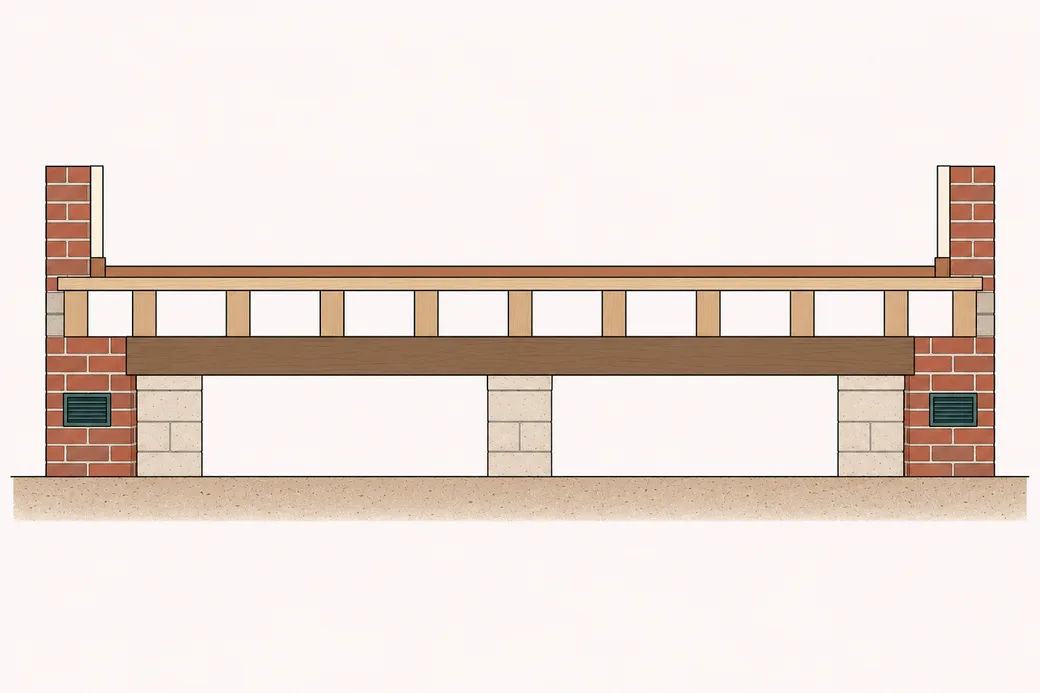
- Short masonry piers standing on the ground
- A timber beam resting on the piers
- Floor joists and the floor on top of the beam
- The open crawl space under the floor
Cost and What Drives It
One DFW repair company's 2020 cost page said pier and beam repairs in Arlington, Irving and Grand Prairie averaged about $3,500 to $8,000, and could top $10,000 in North Texas. The same page said a job that only needs shims may come in under $1,800. Those are one company's figures from 2020, not a price for your house.
For a wider view, two companies publish current averages for all foundation repairs around Dallas and Denton. One large Texas company puts its Dallas-area average at about $11,117 for 2026. A company with a Lewisville office says its repairs over the past 12 months averaged just over $11,000.
Only someone who has been under the house can tell you what a quote should cover. Our cost guide explains what goes into a quote.
Pier and Beam Foundation Repair Questions
How do I know if my house is pier and beam?
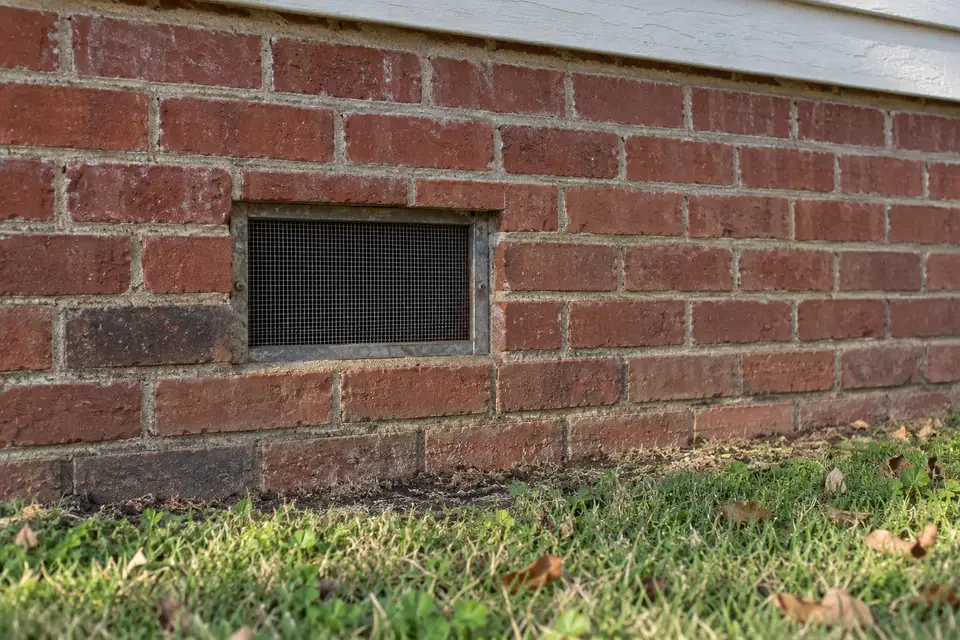
Look for a crawl space. If there's an access door or vents in the wall below the floor line, and the floor sits a step or more above the yard, it's likely a raised floor. With a slab, the concrete floor rests directly on the soil.
Can shims alone fix my floor?
Sometimes. If the piers are sound and have only settled a little, reshimming may be enough. If a pier keeps moving or a beam has cracked, more shims treat the gap, not the cause.
Does the soil in my crawl space need watering?
The Texas engineers' guidelines favor soil moisture that stays near even on all sides of a foundation, and they caution against overwatering. Our watering guide covers your town's rules.
Towns We Serve
Pier and beam repair is available across all three bands:
- West: Krum, Sanger and Roanoke
- Middle: Corinth, Lantana, Highland Village, Flower Mound and Trophy Club
- East: Little Elm, Lewisville, The Colony and Frisco
Related Services
- House leveling: bringing a sloping floor back toward level
- Foundation inspection: a measured look before any repair talk
- Slab foundation repair: if your house turns out to sit on a slab
Get a Free Pier and Beam Inspection in Denton
Tell us what you've noticed and where the house is. A foundation repair company that works around Denton will check underneath, measure the floors and explain what they find. The visit is free, with no obligation.
What have you seen?