
Denton County · Cosmetic or structural
Foundation Crack Repair in Denton, TX
Hairline, stair-step, diagonal or across the slab: how to read a crack, and what your band adds.
A new crack is easy to worry about, especially one you're sure wasn't there last month. The good news is that most cracks aren't a sign of a failing foundation. Foundation crack repair in Denton, TX starts with working out which kind you have: a crack in the finish that only needs patching, or one that points to the ground moving under the house.
- Free inspection
- No obligation
- Town-by-town soil data
- Referral service, disclosed
- Call (940) 535-7201
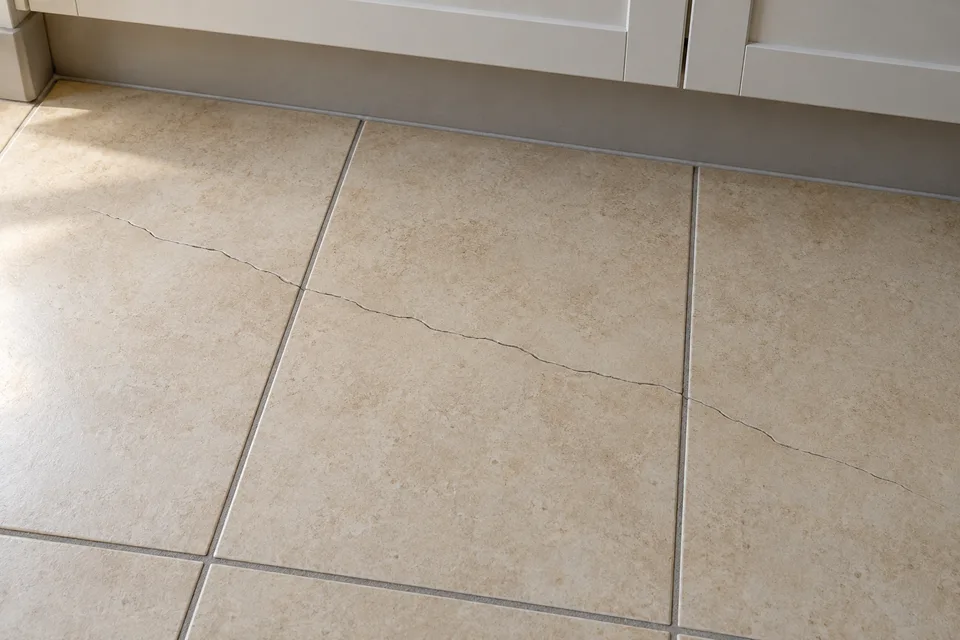
A free inspection can sort that out. A foundation repair company that works around Denton will look at the crack, measure the floors and tell you what they see.
What have you seen?
Foundation Crack Repair: Cosmetic or Structural?
The Texas Section of the American Society of Civil Engineers says the majority of cracks don't compromise a building's structure. What matters is what a crack looks like and what it's doing. These four patterns come up most often:
- A hairline crack in drywall. HUD's rehab inspection guide says wall and ceiling cracks usually come from settling, wood that warps or small seasonal shifts.
- A stair-step crack in brick. It follows the mortar joints up and across like steps. The same guide says cracks tend to run on a rough diagonal along mortar joints, most often at corners and beside openings.
- A diagonal crack from a window or door corner. The same guide names corners and openings as the likeliest places for cracks to start.
- A crack across the slab or a tiled floor. The Texas engineers list cracked concrete and split floor coverings among the signs they weigh. One that widens is worth measuring.
HUD's guide gives a few more clues. A clean crack points to recent movement, while a dirty or filled one may have stopped. A crack that's widest at one end and narrows to a hairline at the other can signal faster settling. And a foundation crack 1/4 inch wide or more and 12 inches long or more is flagged as a deficiency under HUD's housing inspection standard.
Age changes the reading too. The same guide says a half-inch crack in a new building may mean rapid settling, while in one 50 years old it can mean very slow movement. Frisco's median home was built in 2009, and Denton's in 1995, so the same crack can mean different things in each.
Four kinds of crack
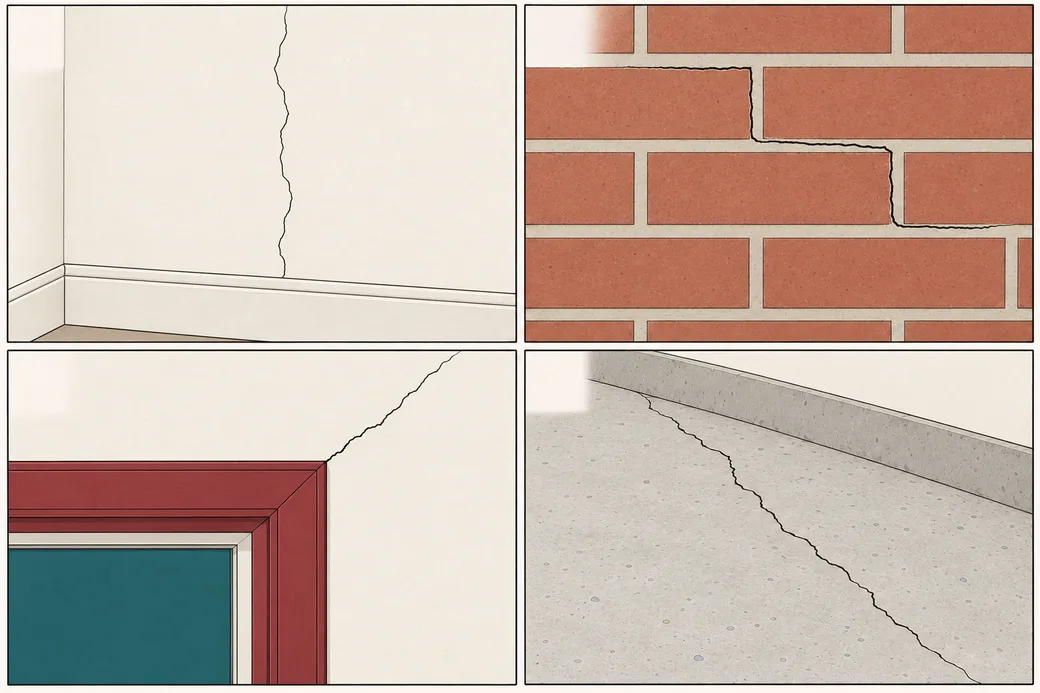
- A fine crack in a painted wall
- A crack stepping along the brick mortar
- A crack rising from the corner of a window frame
- An uneven crack across a concrete floor
West, Middle or East: What Changes
On the clay bands, some cracks open and close. HUD's guide says seasonal movement makes some cracks open and close on a regular cycle. West of Denton, Krum had 96% of its land points on high or very high shrink-swell soil. East, The Colony had 94.7%. A crack there that widens in a dry August and narrows after the fall rain often points to the soil.
In the middle band, look for water. The Woodbine towns have much less swelling soil: 4.8% of Corinth's land points and 12% of Lantana's were high or very high. If a crack keeps growing in a house there, a leak, a downspout that empties at the wall or a yard that drains toward the house deserves a look.
In Denton, check your own lot. Denton had 44% of its points on high or very high soil, split between two bands. To find out which soil is under yours, try the free lookup in our soil and rock guide.
To tell whether a crack is still moving, mark each end with a pencil and write the date beside it. Be patient with it. Seasonal movement may need six months or more before it shows, by HUD's reckoning.
How the Work Is Done
The repair depends on the kind of crack and what caused it.
- Measure first. The floor is surveyed so the crack can be read against the rest of the house. A crack with level floors around it is a different story from one beside a low corner.
- Patch a finish crack. A crack in drywall or mortar that isn't moving can be filled and refinished.
- Fix the cause of a moving crack. If the survey shows the ground has moved, patching alone is unlikely to last. The repair goes to the support under the house, such as slab repair or pier and beam work, and the finish gets fixed after.
- Watch it afterward. A pencil mark on the patched crack shows whether it stays closed.
Before anyone drills a slab crack
In a post-tensioned slab, steel cables run through the concrete and are pulled tight after it sets. A concrete trade guide warns against cutting or drilling into one, since a cut cable is very hard to repair. Look for a warning stamped into the concrete; the garage floor is a usual spot. If you see one, say so before any crack work starts.
Cost and What Drives It
The cost that matters is whether the cause needs work. Two repair companies publish averages for full foundation repairs around Dallas and Denton. One large Texas company puts its Dallas-area average at about $11,117 for 2026. A company with a Lewisville office says its repairs over the past 12 months averaged just over $11,000.
There's one more thing to check in any quote. A Foundation Performance Association guideline says repair warranties usually leave out finishes such as drywall and brick. So if piers go in, ask who fixes the cracks afterward. Our cost guide explains what goes into a quote.
Foundation Crack Repair Questions
My new house already has cracks. Is that normal?
It can be. HUD's guide says wall and ceiling cracks usually come from settling, warping wood or small seasonal movement. It also warns that a wide crack in a new building can mean faster settling, so one that keeps growing is worth a look.
Can I just fill the crack myself?
You can, if it's a fine crack in drywall that isn't moving. Mark it first and wait a while. If it opens again, the cause is still at work.
Does the inspection cost anything?
No. You pay nothing for the visit we arrange, and nothing is owed after it.
Towns We Serve
Crack inspections are available across all three bands:
- West: Krum, Sanger and Roanoke
- Middle: Corinth, Lantana, Highland Village, Flower Mound and Trophy Club
- East: Little Elm, Lewisville, The Colony and Frisco
Related Services
- Foundation inspection: a measured look that puts a crack in context
- Slab foundation repair: when a crack traces back to a slab that has moved
- House leveling: when cracks come with floors that slope
Get a Free Crack Inspection in Denton
Tell us where the crack is and roughly where the house is. A foundation repair company that works around Denton will take a look and explain what it means. The visit is free, with no obligation.
What have you seen?